Seamless Pipe vs Welded Pipe vs Spiral Welded Pipe: Manufacturing Process and Key Differences
- Share
- Issue Time
- Jan 29,2026
Summary
Steel pipes are widely used across construction, energy, infrastructure, and industrial projects. Seamless pipe, welded pipe, and spiral welded pipe are the three most common types. Although similar outside, manufacturing processes are fundamentally different.
Let us compare seamless pipe, welded pipe & SAW welded pipe from manufacturing and application perspective, to better understand how to choose the right steel pipe for project.
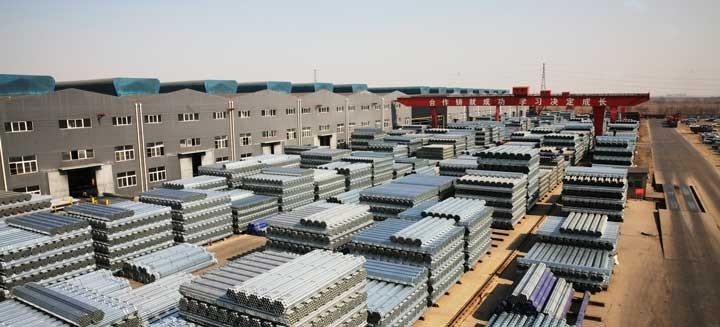
Steel pipes are widely used across construction, energy, infrastructure, and industrial projects. Among them, seamless pipe, straight welded pipe, and spiral welded pipe are the three most common types. Although they may look similar from the outside, their manufacturing processes are fundamentally different, which directly affects their mechanical performance, cost, and application range.
Manufacturing processes of seamless pipes, straight-welded pipes, and spiral-welded pipes
Seamless Pipe Manufacturing Process
: No Weld, Uniform PerformanceA seamless pipe is manufactured without any welding seam along the pipe body. It is produced by piercing a solid round steel billet, forming a hollow tube that is further processed into the required size.
1. Hot Rolling seamless steel pipes / Hot Extrusion (Main Process)
This process is highly efficient and suitable for producing large-diameter and thick-wall seamless steel pipes.
> Round steel billet heating
> Piercing (Mannesmann piercing process or rotary piercing)
> Rolling and elongation
> Sizing or reducing
> Cooling, straightening, cutting, and inspection
2. Cold Drawing seamless steel pipes/ Cold Rolling
Cold-finished seamless pipes offer higher dimensional accuracy and smoother surface finish, commonly used for precision applications.
> Hot-rolled seamless pipe as raw material
> Pickling and lubrication
> Cold drawing or cold rolling through dies
> Heat treatment to remove internal stress
Straight-Welded Pipe Manufacturing Process
: High Efficiency and Cost AdvantageA welded pipe is produced by forming steel plate or steel strip into a tubular shape and then welding the seam along the pipe’s longitudinal axis, creating a straight weld.
1. High-Frequency Welded Pipe (ERW / HFW)
This process offers high production speed, low cost, and stable quality, making ERW welded pipes one of the most widely used steel pipes.
> Continuous forming from steel strip
> High-frequency current heats the edges
> Pressure welding without filler metal
2. Longitudinal Submerged Arc Welded Pipe (LSAW)
LSAW welded pipes are suitable for large diameter and thick wall pipelines with high strength requirements.
> Plate forming by JCOE or UOE process
> Internal and external submerged arc welding
> Mechanical expansion after welding
Spiral-Welded Pipe Manufacturing Process
: Flexible Solution for Large DiametersA spiral welded pipe is formed by winding steel strip at a specific helix angle and welding along the spiral seam, creating a continuous helical weld around the pipe body.
> Spiral forming from steel strip
> Internal and external submerged arc welding
> Fixed-length cutting, weld inspection, hydrostatic testing
Optional pipe expansionBy adjusting the spiral angle, the same strip width can be used to manufacture different pipe diameters, offering excellent flexibility.
Comparison among Seamless Pipe vs Straight Welded Pipe vs Spiral Welded Pipe
When comparing seamless pipe, welded pipe, and spiral welded pipe, there is no universally "best" option.
The right choice depends on pressure requirements, pipe diameter, operating environment, and project budget.
| Steel Pipe Types | Seamless Pipe | Welded Pipe | Spiral Welded Pipe |
| Weld Seam | No weld seam | Straight seam | Spiral seam |
| Pressure Resistance | Excellent | High | Medium |
| Manufacturing Cost | High Production Cost (Lower material utilization) | Low to Medium Cost (High production efficiency) | Medium Cost (High material utilization) |
Dimensional Accuracy | Medium | High | Medium |
Large Diameter Capability | Limited | Strong (LSAW) | Very Strong |
Typical Use | High-temperature and high-pressure environments | Structural & pipelines | Large-diameter projects |
Applications | Oil and gas pipelines, boiler tubes, hydraulic cylinders, mechanical structures, power plants, and chemical processing systems. | Structural steel pipe, scaffolding, furniture, low-pressure fluid transmission, oil and gas transmission pipelines, offshore structures, wind power towers. | Water transmission, gas pipelines, piling pipes, structural supports, large-diameter low-pressure pipelines, and some onshore oil and gas projects. |