Steel price trends in Aug 2026
- Share
- Issue Time
- Sep 1,2026
Summary
August steel PMI rose to 47.4%, continuing recovery but still sub-50. Sept "Golden September" peak season: demand recovers month-on-month with limited upside, supply flexible, cost support firm. Prices oscillate higher but gains capped. Infrastructure and manufacturing pick up as rainy season ends; real estate remains weak, capping long-steel demand. Supply contraction from Aug maintenance offers floor, but price rebound may trigger restarts. Plate outperforms longs.
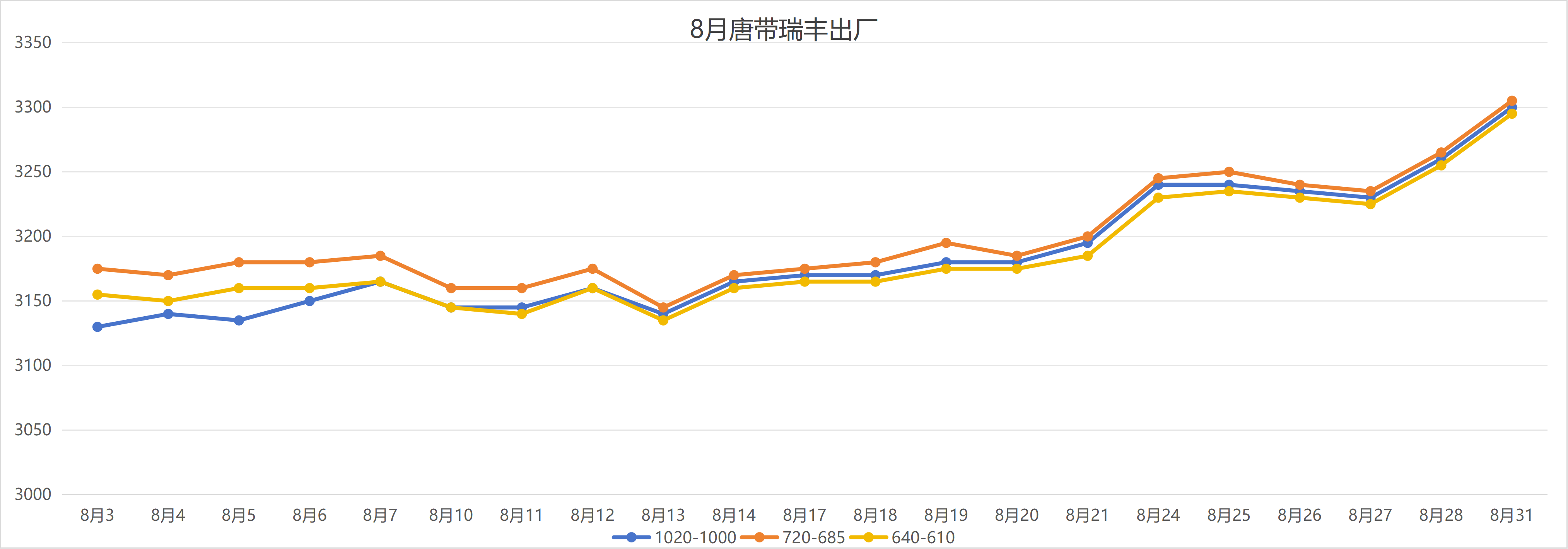
Steel price trends in August 2026
The August Steel Circulation PMI, jointly released by the China Metal Materials Circulation Association and Lange Steel, came in at 47.4%, up 1.3 percentage points from the previous month, continuing its upward movement but remaining in contraction territory. Among the sub-indices, 6 of the 10 categories rose, 2 fell, and 2 remained flat. The indices for sales volume, selling prices, total orders, procurement costs, trend judgment, and purchasing intentions posted gains; delivery speed and inventory levels declined; while financing conditions and employment held steady.
Looking ahead to September, the domestic steel market will enter the traditional "Golden September" peak season, characterized by month-on-month demand recovery with limited incremental growth, controllable supply flexibility, firm cost support, and prices oscillating on a stronger bias but with capped upside. The plate-over-longs divergence is expected to persist, with no broad-based unilateral rally on the horizon.
On the demand side, as the high-temperature and rainy season draws to a close, infrastructure construction and manufacturing production are gradually picking up. The continued implementation of special-purpose bonds and ultra-long-term special treasury bonds is translating into greater physical work volumes. Manufacturing sectors—including automobiles, wind power, and construction machinery—are ramping up inventory in preparation for the peak season, while steel exports are showing resilience. Overall steel consumption is expected to improve notably compared to August on a month-on-month basis. However, the real estate sector remains the core drag: developer funding pressures persist, new starts stay depressed, and only the delivery of existing projects and affordable housing provide limited support for construction steel. Year-on-year demand for long steel remains weak, capping the upside potential during the peak season.
On the supply side, widespread industry losses triggered concentrated mill maintenance in August, leading to a temporary contraction in output and providing a price floor. But a key risk to watch in September is that any price rebound could restore mill profitability, prompting idled blast furnaces and EAFs to restart quickly. Such a supply response would cap price gains, especially with crude steel output reduction policies also in effect. Overall supply is expected to follow a "contraction followed by modest recovery" trajectory.
On the raw materials front, conditions are generally stable with a loosening bias. Iron ore supply remains ample with high port inventories, limiting upside. Coking coal and coke, however, are relatively resilient due to safety inspection policies. Overall, feedstock prices are likely to track finished steel movements, providing floor support rather than acting as a driver for price increases.
In summary, the September steel market is expected to enter a moderate destocking cycle, with plate demand outperforming long steel. The market is likely to see a phased uptick amid volatility, though gains will be constrained. (Source: Lange Steel)